Contact Boyack Law Group for a 100% free,
no-obligation consultation regarding your accident.
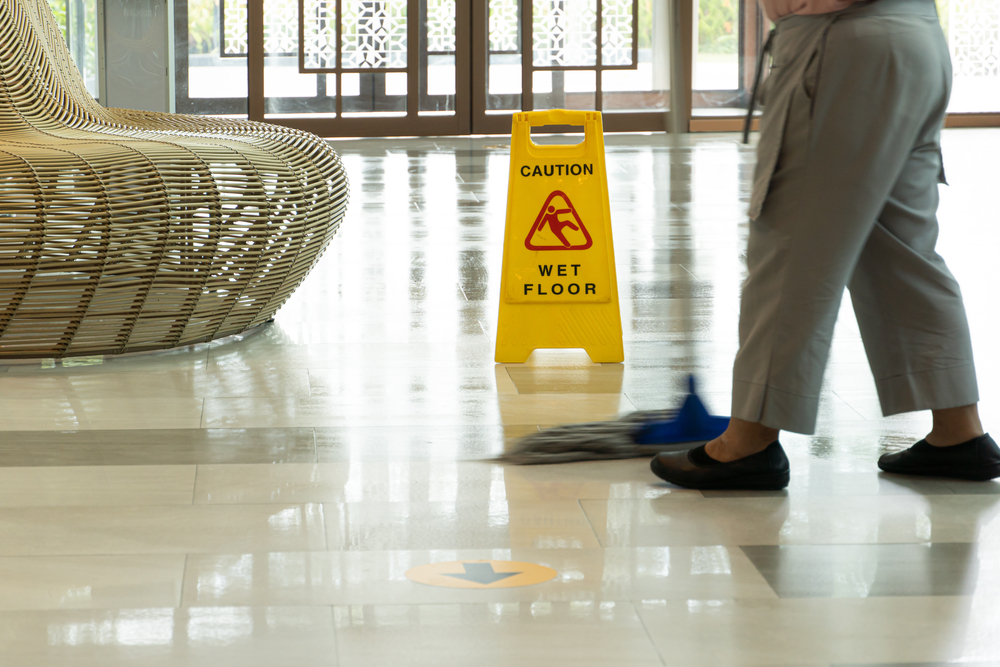
Navigating Slip and Fall Claims at Casinos and Hotels in Las Vegas
When the Nevada Supreme Court decided Foster v. Costco, it made one thing clear: an “open and obvious” hazard does not wipe out a business’s duty of reasonable care. What matters is whether the owner acted reasonably for the setting. That standard matters even more on casino marble and hotel corridors where lighting, music, and shoulder-to-shoulder foot traffic make missteps predictable. Under Nevada law, your slip and fall claim turns on proof.
This guide shows how precise legal steps protect evidence and build LV slip and fall claim value from day one. Boyack Law Group pairs small-firm attention with trial-ready preparation; speak with the top Las Vegas personal injury attorney who moves quickly to secure surveillance, sweep logs, and medical timelines so your personal injury Las Vegas claim is built on facts—not assumptions.
Step 1 — Report to Resort Security and Fix the Record
At a casino or hotel, immediately notify security and request an incident number. Specify the exact location (e.g., “slot aisle near Pit 4,” “buffet entry on the north wing,” “pool deck by cabanas 12–15,” or “elevator lobby, floor 23”). Ask that photos be taken and your description recorded. Prompt reporting helps preserve surveillance footage and cleaning logs that will later prove notice—the central liability question in Nevada premises cases.
Step 2 — Capture Time-Stamped Evidence
Use your phone to photograph: (1) the substance or defect (spill, food debris, loose tile, torn carpet), (2) warning cones or wet-floor signs (or the absence of them), (3) lighting conditions, and (4) your shoes. Angle shots to show footprints, drying rings, or track marks—the kinds of details courts rely on to assess how long a hazard existed (constructive notice). In busy gaming aisles or buffet corridors, these markers are decisive.
Step 3 — Identify Witnesses and Resort Personnel
Gather names and numbers of bystanders, dealers or hosts who saw the condition, and EVS/Housekeeping staff on duty. Note badge names and departments. Witness statements and staffing rosters help your lawyer test the resort’s inspection intervals for high-risk zones (buffets, pool walkways, lobby marble).
Step 4 — Seek Prompt Care and Build the Causation File
Use the on-site clinic if available or visit urgent care/ER. Follow orders and keep appointments; consistent treatment records strengthen causation and value. Nevada’s modified comparative negligence standard reduces an award by any proven guest fault, so clear medical documentation counteracts defense arguments about gaps in care or unrelated conditions.
Step 5 — Send a Preservation Letter for Surveillance & Logs
Casino systems can overwrite video within days. Your attorney should immediately send a preservation (spoliation) letter demanding retention of surveillance from all relevant cameras, inspection/sweep logs, incident reports, and maintenance records for the precise area and time window. Early, targeted preservation increases the odds of keeping decisive footage and records for an experienced Las Vegas personal injury attorney to use in negotiations or trial.
Step 6 — Prove “Notice” with Resort Policies vs. What Actually Happened
Liability usually turns on whether the owner knew or should have known about the hazard and failed to act reasonably. Your lawyer will compare:(a) Written inspection policies (sweep intervals for gaming aisles, buffet zones, and pool decks), (b) Actual sweep logs and staffing rosters, and (c) Video timelines. Nevada practice materials stress sweep logs and training as the backbone of hazard detection; mismatches between promised routines and reality can establish constructive notice.
Step 7 — Address “Open and Obvious” Without Giving Up the Duty
Resorts often argue a spill, pallet, or obstacle was “open and obvious.” The Nevada Supreme Court in Foster v. Costco held that obviousness does not automatically relieve a landowner of the duty of reasonable care; it simply bears on whether the owner acted reasonably and how comparative fault is allocated. This matters in casinos, where distractions (crowds, flashing lights) are foreseeable; reasonable measures—cones, prompt clean-up, rerouting foot traffic—remain required.
Step 8 — Avoid Shortcuts: Nevada Limits “Mode-of-Operation” Arguments
Some jurisdictions relax the notice requirement in self-service settings; Nevada does not broadly do so. In FGA, Inc. v. Giglio, the Supreme Court rejected a mode-of-operation instruction for a sit-down restaurant and emphasized proof tailored to the business and the actual condition. In resort contexts, that means establishing time-on-the-floor and showing inspection routines were unreasonable for guest-traffic patterns—especially in buffets and beverage areas.
Step 9 — Apply Nevada’s 50% Threshold and Calculate Damages
Under NRS 41.141, damages are reduced by your fault percentage and barred only if your share exceeds 50%. Damages can include medical expenses, therapy, lost wages, diminished earning capacity, and non-economic losses. Insurers for major resorts scrutinize percentages while reviewing video, logs, and medicals; a thoroughly documented file raises settlement value.
Step 10 — File Suit in the Right Venue and Leverage Discovery
When settlement stalls, a suit is typically filed in the Eighth Judicial District Court (Clark County) or the U.S. District Court, District of Nevada if diversity applies. Early discovery should target: sweep schedules, housekeeping training, maintenance tickets, prior similar incidents in the same zone, and the resort’s retention policies for ESI/video. These requests align with Nevada authority emphasizing reasonable inspections and notice.
Step 11 — Retain the Top Slip and Fall Attorney Who Moves Fast in Casino/Hotel Settings
Evidence wins these cases: notice proven through video, sweep logs, and witness accounts; duty confirmed by Nevada law that does not erase responsibility simply because a condition seems obvious; and fault allocated under NRS 41.141. Boyack Law Group builds casino and hotel files that track inspection routines against real-world footage and staffing, then pushes insurers on the facts. Call us now to get started.
Please call Las Vegas Personal Injury Attorney Bryan Boyack at the Boyack Law Group for more info on how we can help.
Call Now